
GO-Mobility
I have a dream
Shaping the future of on-demand mobility with the DREAM_PACE project
People’s mobility evolves as society changes. Transformations within the labour market and habits led to increasingly irregular travel patterns, with fewer fixed schedules or standard commuting chains. Technology is reshaping the way we access mobility services, and it is creating new ones. Meanwhile, the automotive industry is shifting toward fossil-free fuels and alternative ownership models (but not very smoothly). At the same time, the urbanization process continues to drain marginal areas (such as mountain communities or small villages), fueling low-density urban sprawl.
This is where flexible, on-demand transport comes in: a system capable of adapting to people’s changing mobility needs, tailored to diverse territories through technology and the power of data. That’s why GO-Mobility was selected as a technical partner by Bologna’s metropolitan public transport agency (SRM) to support the Interreg DREAM_PACE project: a program that integrates #DRT and public transport within a #MaaS approach.
The dream of flexible (but also reliable) public transport
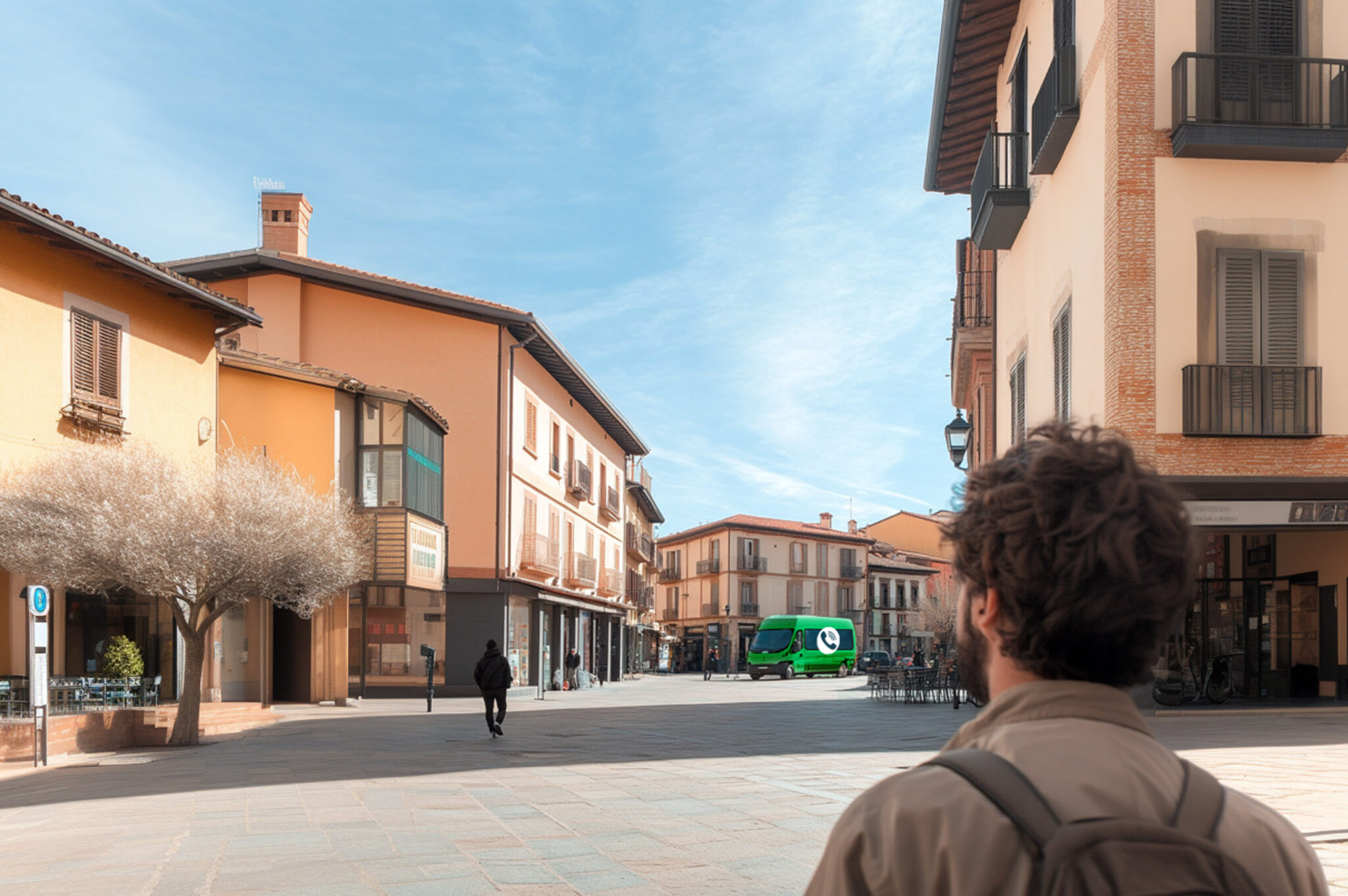
What is on-demand public transport? Also known as Demand Responsive Transport (DRT), on-demand mobility is based on flexible, dynamic systems that connect passenger requests with available vehicles in real time via digital platforms. Unlike fixed-schedule bus lines, DRT enables dynamically generated routes based on actual user needs. This means no more rigid schedules, but adaptive transport that responds personally to local demand.
DRT is especially strategic for low-demand areas — rural zones, small towns, or outer suburbs — where low population density and erratic mobility habits makes traditional transport economically unsustainable. On-demand services can guarantee access to schools, hospitals, and workplaces, reducing social isolation and revitalizing depopulating areas. These services also minimize the waste of resources by avoiding empty buses and saving fuel, using smaller vehicles, such as minibuses, instead of full-size buses, which are often unsuitable for the actual demand levels in these areas.
DRT is also ideal for nighttime transport: it ensures access to less-served zones when standard lines are inactive, offering reliability and flexibility even when the mobility demand is lower and unpredictable. Workers on night shifts or those with occasional travel needs can benefit from pre-bookable services, safer journeys, and direct routes—particularly relevant for vulnerable groups like women, youth, or those with reduced mobility.
Modern DRT systems adapt service frequency and coverage to real-time demand, improving efficiency and reducing operating costs. They provide a real alternative to private cars in areas where public transit is rare, helping cut emissions and improve urban quality of life.
Oh no… not again 🚨
Despite its potential, DRT is often misunderstood. Many associate it with the elimination of traditional lines and complicated services doomed to fail. But today’s context is different. With the rise of digital literacy, data availability, and better management tools, DRT is finally ready to succeed.
Thanks to booking apps and geolocation, users can now book rides in real time or in advance. Routing, scheduling, and passenger flows can be optimized with intelligent systems that align public needs with operational planning.
Together with MaaS – the integration of various mobility services into a single platform that treats “Mobility As A Service” – DRT perfectly embodies the core of major technological innovations (“disruptive mobility“) expected to drive the future of transport, especially when combined: electrification, sharing, and autonomous driving.
In the episode ‘Hang the DJ’ of the Black Mirror series, we see characters from a hypothetical future comfortably moving around in shared, self-driving electric vehicles based on a app booking system. No parking dilemmas, delayed buses or walking miles.
The mechanism that ensures this triangulation works and delivers the expected results—namely a competitive, long-lasting, and economically sustainable service—depends on key factors such as the integration of these services into the public transport system (rather than remaining standalone solutions), and the collection and exchange of data among the various actors involved (mobility operators, public authorities, MaaS providers). This is where DREAM_PACE comes into play ➡️
What is DREAM_PACE?
DREAM_PACE stands for Demand REsponsive trAnsport integrating regional Mobility networks for PAssengers in Central Europe. It is an Interreg Central Europe programme project aimed at improving accessibility and connectivity in low-demand areas by integrating public transport services with on-demand mobility solutions within a MaaS framework.
The project addresses several specific challenges by focusing on the strategic mobility planning of six metropolitan areas in Central Europe, each with different focuses:
- Integrating DRT and Public Transport, promoting better synergy between DRT services and the public transport network (Bologna Metropolitan City, Pavia, and Budapest);
- Coordinating existing DRT initiatives, supporting improved alignment among current DRT services through a bottom-up approach (Osttirol – Austria, and Baden-Wuerttemberg – Germany);
- Testing new greenfield DRT approaches, developing integrated on-demand mobility strategies in areas currently lacking such services (Split-Dalmatia County, Croatia).
Through this approach, the DREAM_PACE project aims to define standards for the EU-wide dissemination of a more flexible, efficient, and inclusive mobility system, enhancing access to essential services in low-demand areas.
The project’s main outcome is the development of guidelines for integrating this DRT model into strategic mobility planning tools, such as Sustainable Urban Mobility Plans (SUMPs) and Public Transport Plans.
Bologna On Demand
As part of the case study in the Metropolitan City of Bologna, GO-Mobility was selected as a project partner to provide technical and methodological support to the city’s mobility agency across several key phases, including:
- Territorial mapping and analysis: identifying low-demand areas through the integration of multiple data sources, including mobile big data, Floating Car Data (FCD), and CATI/CAWI surveys;
- Demand modelling: employing advanced methods for collecting and analyzing big data (FCD, mobile data) to estimate potential mobility demand and generate O/D matrices that help forecast DRT service usage;
- Stakeholder engagement: supporting SRM in involving local actors through a Living Lab—a collaborative and informative space that brings together public bodies, transport operators, businesses, experts, and industry associations through workshops and meetings to foster dialogue and promote co-design processes;
- Development of guidelines and standards: translating the work into scalable guidelines for integrating DRT with public transport, including requirements for data exchange protocols and service contracts, with the goal of supporting effective governance and operational implementation.
This process highlights the crucial role of data collection, analysis, and sharing in the success of the project. Effective management of big data, integration technologies, and analytical tools allows for precise identification of areas best suited to DRT and for designing mobility solutions tailored to the unique characteristics of each territory—delivering adaptive, user-centric services.
However, DREAM_PACE is not only about data and technology: it also confronts participants with one of the most complex challenges in DRT services—the stable integration of this transport mode within public service contracts. This issue demands a broader debate on national and regional funding for public transport and the related funding calculation schemes.
The journey undertaken with SRM, along with the other European case studies, represents a significant step toward a shared and replicable solution for public transport. It integrates both MaaS and DRT approaches, combining:
- Reliability: ensuring service availability, especially in areas lacking or underserved by traditional public transport due to low demand;
- Flexibility: the ability of services to activate and deactivate based on real user needs, optimizing resource allocation and service costs, and enabling door-to-door solutions—typically exclusive to taxis or private hire services.
Ultimately, this contributes to realizing “the dream” of a sustainable, efficient, and adaptable public transport network, where no area or person is left behind.
Subscribe to our newsletter
©2025 GO-Mobility s.r.l. | Partita IVA 11257581006

